Culturalism · Personal Finance

While You Were Outraging…

Is any anger campaign organic?

It might seem like a silly question, as we already known that “going viral” is largely a planned and calculated event, designed by firms to generate followers and purchases. That’s old news. The real query relates to whether these “outrage activist” movements are not aligned with the same interests.

Think about it for a second: at the beginning of December, Peloton’s cute holiday mom ad began to generate substantial controversy for its depiction of a woman working out.

Fat activists were furious at the misogyny and sexism, because the husband is not shown working out, and his wife already happens to be slim. Those who thought the fury was silly probably pointed out that exercising is not just about losing weight, but also remaining healthy.

 Now, I will not pretend the Denny’s Division was not at some level legitimate; after all, we are well aware of the Trigglypuff saga.

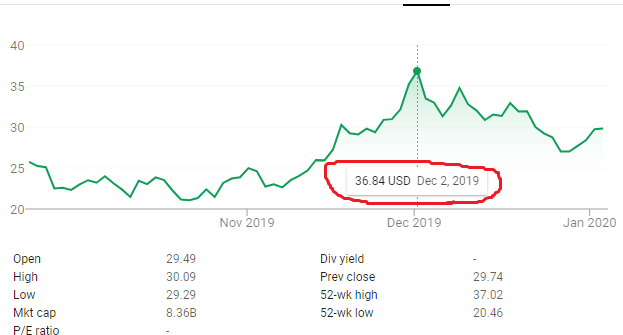
But what was the broader objective? Let’s take a look at Peloton’s stock price right before this controversy blew up around December 2nd:
And now December 5th:

As you can see, Peloton suffers a nearly six-dollar drop over the course of a few days, the perfect opportunity for someone SHORTING the stock. In the event they chose to wait a bit longer, Peloton actually hit $27.00 per share on December 26th.

So, is Wall Street paying for SJW campaigns in order to rig speculative bets on stocks?

I’d lean yes, but no one is really paying attention.

Personal Finance

Is Buying a House Worth It?

“Buy a house, cause it’s an ASSET.”

You’ve probably heard this line before, perhaps from a baby who boomed. It sounds good, as rent can be expensive and just tosses money out the door to someone else. Who wants to do THAT?

In reality, home ownership less of a prize than your elderly benefactors (read: mortgage salesmen) will let out. While exceptions exist, a house is often a net financial loss due to misconceptions about what it entails.

To begin, we have entry expenditures. These will include the time investment of looking at potential homes, paying for inspections (home, radon, and chimney are just a few), and closing costs. Together this can run $4-5k, if not more.

Now, if you don’t put down 20 percent on the mortgage, you’ll have to deal with PMI, and should the bank say you don’t have to pay with them, it’s probably just fancy calculus. Your monthly expenses will include the loan principal, usually homeowners insurance, utilities, PMI, and interest.

“Yeah but you can DEDUCT your mortgage interest.”

Hehe, nice try. Due to changes enacted in the Tax Jobs and Cut Ass legislation signed by Trumpy, you have to itemize to receive the deduction, and in many cases the Standard Deduction will be a better deal. Key point here: the deduction is not a dollar-for-dollar benefit, so you can’t assume massive proceeds.

Then we have upkeep and repair. A house I recently looked at came back with so many problems it would have required about $70,000 in improvements to be worth what I initially offered. It was “AS IS,” of course. You either make those changes as a homeowner, or sell for far below what you want years later. Houses are like cars; they don’t usually age well with constant use.

To be fair, it’s possible to use the pass-through rules to save on taxes if you rent out rooms, and there might still be a tax credit for solar panels if that sounds desirable, so it’s not all bad.

But it isn’t the dream they talk about.

Personal Finance

A Warning On “No PMI” Mortgages

Home ownership is a tricky question that increasingly less young people are bothering to answer, but for those who take the leap, there are some pitfalls to lookout for.

Case in point: “No PMI” mortgages. To the fresh and eager, PMI stands for Private Mortgage Insurance, a wonderful charge applied to loans where the debtor puts a down payment of less than 20 percent on the overall price. It might not be a whole lot, but evading monthly expenses is usually a good thing.

Almost too good. As it turns out, lenders that will let you avoid that added cost are just trying to reel the line in. Sure, there is no PMI officially on the statement, but they will simply RAISE your rate offer to compensate.

For instance, say the prevailing interest rate for a conventional fixed loan of $200,000 is 3.75 percent. Normally, you would get a PMI of 0.5-1 percent, so between 83-166 dollars monthly.

Because the banker is a wonderful human bean, he will waive the PMI fee, whilst jacking up the mortgage rate to 4.75 percent.

Looking out for you

So yes, you do “save” by not paying PMI. They just take it out (with interest) and give a big smile.

It’s all about the numbers.

Personal Finance

How Much To Save Monthly For $1 million

I have never been a big fan of “How To Save a Million” articles. They all too often drip of the smug empathy you would expect from modern financial experts; plenty of hope, but very little reality.

Why they stop at $1 million baffles me, as it’s not nearly enough money to retire, especially when we factor in healthcare costs. In truth, you need closer to three times that amount to get anywhere close to a decent golden year lifestyle, and that’s assuming a whole lot of other things fall in line. One million bucks should thus be a short-term goal of about ten years, as opposed to some career-spanning objective.

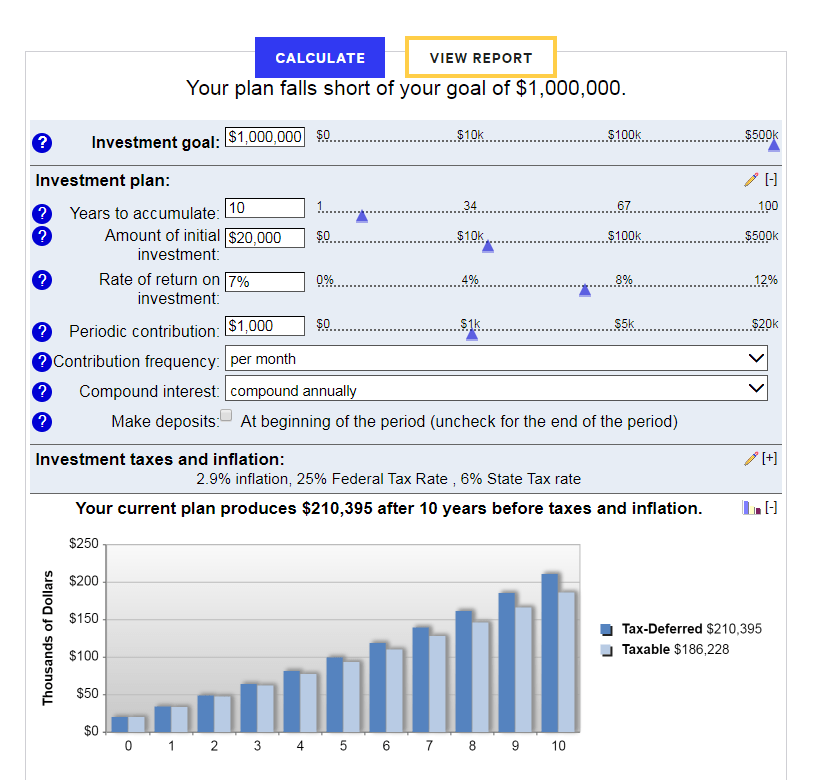
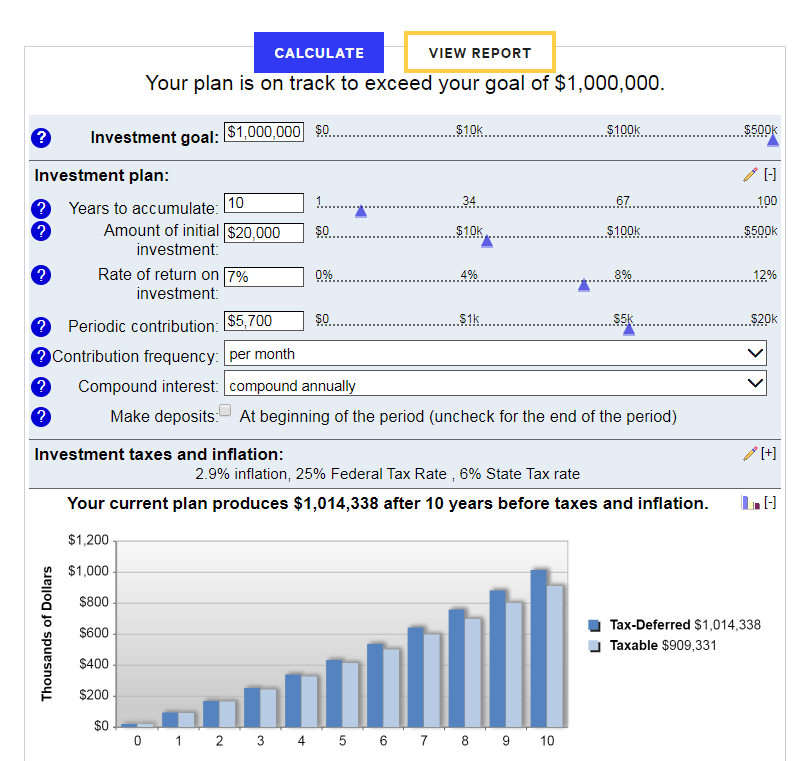
Let’s use that first million in a decade with the Bankrate calculator, which generates a pre-tax number. If you were to start with $20,000 and put in $500 per month, you would have 125k after ten years, assuming an average return of 7 percent and inflation of 2.9 percent.

That’s not good enough.

Suppose we double it. Now you’re putting in $1,000 during every 30-day block, and still only reaching 20 percent of your goal after a decade.

So how much do you REALLY need? About $5,700 in total contributions, PER MONTH. That’s the reality, folks. And here we’re assuming no drastic market collapse, along with careful investing to avoid tax penalties.

To be fair, we are not factoring in an employer 401k with matching, but those are not always available, and you still are limited by the $20k or so cap.

The takeaway is this: you either need to save much more money, get a pension, or find somewhere extraordinarily cheap to retire.

One million dollars won’t cut it.  

Personal Finance

Buying a House is No Fun

Something I have come to realize is that most narratives of Americana are pushed to benefit a particular market segment. You have proposals for Zales, football for beer, and country living for trucks. They all seem so wonderful, the makings of a dream for the working man. Just spend a little money.

I have another to add on the list: buying a home. Despite loads of banking propaganda, the reality is a whole lot less satisfying than it seems. High costs, unit problems, and finding one you actually like.

As I go through the process myself, I am calling into question most claims made by the scruffy promoters. Houses don’t seem to be assets, because they’re either too expensive to pay by yourself, or too small to have appreciation potential.   

Want to rent it out? Better check with the HOA or neighborhood watch. And don’t get me started on municipal laws. It all becomes a heartache.

Stumble upon a dream model? Too bad, it has an antiquated heating system, outdated septic, or some fat foundation crack. But the list price is still high, and you have enough competition to make the bidding tight.

 In the event regular houses are off the table, you face townhomes and condos with astronomical fees, sometimes over $600 monthly, just to live there. Rest assured it is a “starter home,” however.

Maybe I’m just too crotchety for 2019, but holy closing costs. What happened to the American Dream?