Culturalism · Economic History

The Usufruct Concept

In the course of compiling a section of the new socialism book focused on “conservative realism,” I came across a term which was uncharacteristically unique: usufruct. My initial reaction upon seeing it could be summed up as skeptical; I actually figured it was nothing more than a typo, albeit without the friendly red lines of MS Word’s liberal dictatorship. Closer investigation revealed that it refers to a very special idea: the relative status of private property.

Most readers of this blog come from Western countries such as the U.S. or U.K., both nations with storied histories of the longtime struggle to protect property against greedy usurpation by monarchs. Americans in particular are adamant about their rights to do with property what they wish, even as the wretched scourge of HOA’s and property taxes fester well and strong. To us, the notion of being told what to do with our property is outrageous, and bound to result in furious town hall meetings, or angry “letters to the blogger” until such “socialist” wrongs are reversed. Seldom is any other reality considered.

But a lack of appreciation for different models does not mean they magically cease to exist, especially over time, as objectives and crises change our perspective. Here the usufruct proposal gains far more relevance, particularly whilst we wrestle with the issues contained by migratory patterns and environmental degradation. Put simply, it refers to the contrast between Eigentum (private property) and Besitz (possession). In the former, one is free to do whatever he pleases with the terrain, including sales or destruction. Besitz on the other hand means the individual can use the land for his creative or business purposes, but not at its expense or defilement. As one writer notes:

“To have a thing as one’s ‘private property’ means that one can do what one likes with it — can sell it, injure it, or destroy it at will. To have ‘possession’ of a thing means usufruct, that one is entitled to use the thing, to exploit it, but subject to the will and supervision of another, the substantial ‘owner’, whose ‘private property’ it is.”

This supervision and ownership is conceived of typically to be the State, or perhaps a community and people. It theoretically allows folks to develop and advance personal wealth (as opposed to socialist stagnancy), yet prevents them from selling out to foreigners or poisoning the soil with their habits or business practices. Failure (or disinterest) in using the land means it will revert back to the community and be parceled out to another aspiring cultivator, one who must of course be native to the region.

Although a strange concept, we are almost forced to assess how it might help address certain problems currently affecting Western countries. Conservatives have long lamented the decline of identity and culture, yet they also insist on a property system where any foreigner with money can waltz in and purchase land, upsetting the traditional balance of that location. Leftists complain about environmental decline, while also advancing open borders and refusing to seriously explore the possibility of degrowth. Both are victims of their own beliefs, and doomed to failure because of those precepts.

Maybe usufruct is their saving grace.
Culturalism · Personal Finance · Uncategorized

Monuments To Nothing

As a teenager I rode the local commuter bus to college in the days before I could afford a car. It was an interesting experience, particularly due to all the interesting characters I would come across, from government-paid drivers ranting about the dangers of socialism, to the historically butthurt claiming fares were racist. On an especially rainy day, when the bus was emptier than usual, a guy about my age struck up conversation about philosophy and life. “Mark,” as he called himself, was concerned over the decay of society, a matter being expressed in various forms, but especially so with the bland nature of architecture, which he saw as communicating nothingness and unoriginality. We ended the discourse at my stop with a handshake, and ventured off into that somber world.

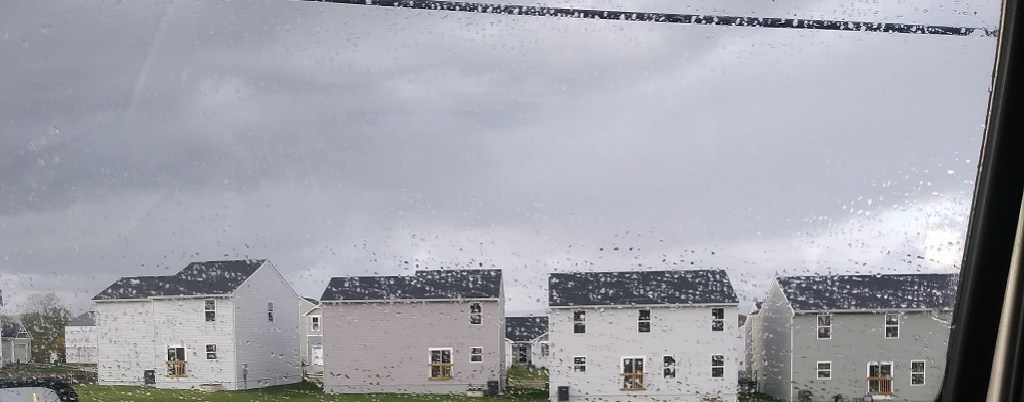
I only saw Mark once after that day, this time in passing, but his message has struck me as immeasurably profound with each passing year. Even a cursory look at new developments tells the undoubting tale: the objective is functionality, not art or community. Take a glance over here, for instance:

Pretentious vinyl siding rushes about the landscape’s face, displacing any alternatives, such as wood, stone, or brick. The colors are drab stains of white or gray, cut through only by the random placement of windows giving no evidence of skilled impression apart from the tablet-fed blueprints of Toll Brothers and their associated clan. The double back doors are imprisoned by cheap-looking baby gates drilled into the siding – a final insult for those unwilling to pay for the full wooden deck model. Those so fortunate to spend the additional $20,000 can relish their descent into a yard of astro-turf grass, green and cordoned as expected.

What prevails in these models is a stark sense of disinterest in creating the classical vignette of a close-knit neighborhood. The homes (or townhomes) stand there to serve as miserable and costly testaments to the need for proximity to a commuter route, and thus Wonder Bread on the table. Anything else is beneath slight importance. After all, with “smart” devices and the surveillance witch machine, why should anyone care about their fellow residents?

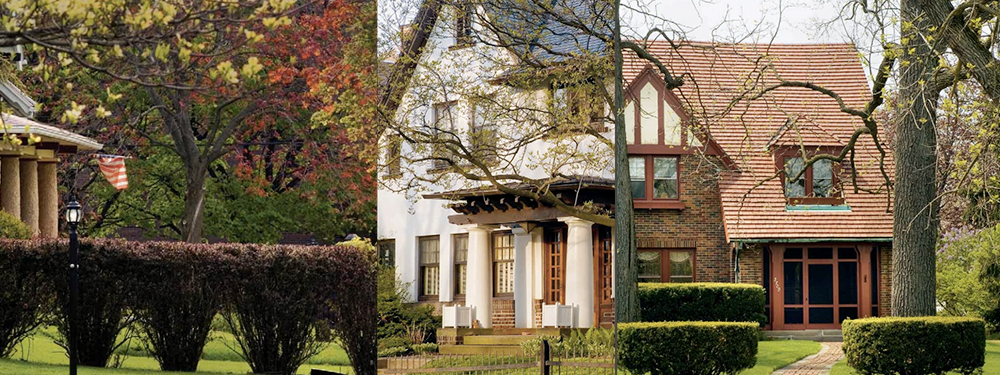
The basic necessities approach pales utterly in contrast to traditional German-American visions in the Midwest, which were driven by a sense that neighborhoods and buildings ought to forge ties between those within, and reflect the dynamism of community. While house models might have been similar to start with, the final touches insisted on showcasing the unit as representative of that family. The neighborhood as a whole was meant to inspire common pride and unity, as opposed to mainline consumerist isolationism.

In many respects, modern architecture highlights our civic and cultural slouching towards mediocrity. To have something unique, one must become a collector, or maybe restore the ancient structures yet remaining. Trying to select a custom model in new residential areas is next to impossible, because everyone is expected to be the same, and observe rules issued by the tyranny of a HOA. Conformity now holds paramount importance, with the vestiges of uniqueness best expressed by a new set of wheels—themselves paid for by overextended credit and bitter squalor. Defiance only comes on the heels of financial turmoil.  So we distance ourselves, obey post-liberal rules, and settle behind the big screen for the brain-melting ganache of Netflix.

Perhaps Mark was righter than he knew. I’d like to tell him so, but that would require a world build upon  community.