investing · Personal Finance

My Investment Arsenal

A few folks have requested to see my approach to investing in more detail, so I decided to conjure up the following post. It obviously features a level of diversification, but more in style than substance. I see investments as both ways to grow money and also explore different concepts, so at times certain targets are selected more for interest than practicality.

Stock Accounts

1. Individual Account (Taxable)

This houses the bulk of my investing money, at times to great annoyance. The biggest upside is easy movement of funds If I need to do something important in the short-term, but the negative surrounds tax policy requiring me to hold longer than I would prefer in some cases.

2. Individual Robo-Managed Account (Taxable)

I got this to take some weight off my shoulders on a weekly basis. My broker service offers different plans optimized for taxes, conservative wealth strategies, or growth, and I place a small amount in each month with minimal overhead where management fees are concerned.

3. Roth IRA (Non-Taxable)

Probably the best place to store your investment holdings for the long run. The money goes in post-tax, but then grows without penalty until you’re older, providing no early withdrawals have been made. I do my best to max this out each year, though I fell short a few years back, and more recently got penalized by the IRS for contributing too much based on my salary.

4. Employer 401k

While I am not a fan of 401k programs, I started putting in 5 percent this year (pre-tax) because my income was creating expensive charges when tax filing rolled around. I made sure to pick the lowest fees for my funds, and generally don’t pay much attention to it other than the occasional checkup.

Fixed Income Sources

1. Savings Account

One can shop around, but I use the decently-high option from my broker service. This account yields a little over 1 percent and is effectively an airlock for money that will journey to any of the first three accounts mentioned.

2. Lending Club

This is more of a novelty than anything else to me. The site allows participants to purchase loans and get paid interest, providing you meet specific income standards. I tossed a grand in at the beginning of the year, focused on two different lines of credit. Probably should check it more frequently, but they don’t come due until a few years from now.

Real Estate

1. Fundrise

Not sure this goes here exactly, but I started with the REIT broker last year, and have enjoyed their products thus far. They offer different portfolios depending on your priorities, but I mostly bought in to take advantage of the projected growth in Midwestern city redevelopment. Biggest downside is receiving multiple forms to enter for taxes, which can create a problem if your software (*cough H&R Block*) doesn’t recognize small dividend amounts. That becomes a non-issue after you have been with them a while, however.

2. Physical Real Estate

As some of you know, I purchased a house earlier this year. Thus far it has required time and pennies, but the goal is to have at least half the mortgage paid by renters, and possibly as much as 100 percent. It also gives me the space to start a new business venture I have been planning for some months now. We’ll see whether I was smart to buy or not in the years to come.

Alternate Hedges

1. Cryptocurrency (Coinbase)

I’ve been nibbling on Bitcoin, Litecoin, Ethereum, XRP, and even 0x for a while now. Can’t say any of them have done spectacularly well, or at least not long enough for me to react. I keep adding despite Coinbase’s obnoxious fees because we can never know what will happen to fiat currency in the future.

 2. Precious Metals

I continue to accrue silver whenever possible. A key thing to consider is WHERE you are purchasing it. Going to a pawn shop or metals joint can lead to astronomically higher prices with no chance of a refund. Make sure to Google the value of whatever you choose to buy, and check online retailers to ensure there is no extreme markup.
#VanLife · Personal Finance · Self-Improvement

Restoring Goldberg Manor: Part II

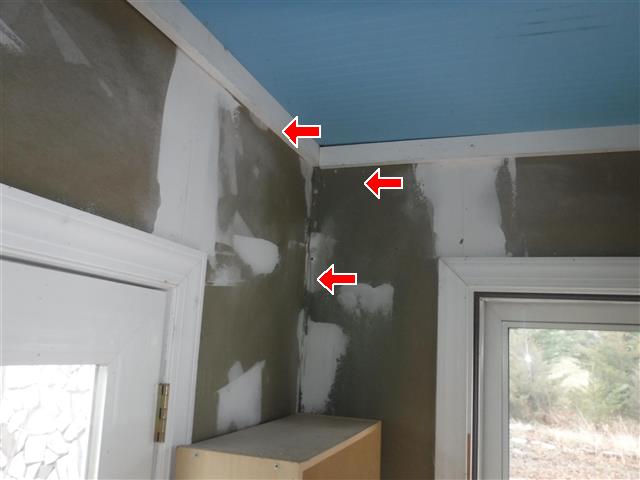
Things are coming along smoothly enough. This past week has been a lot of electrical work, plus some other aesthetic improvements. I also have a larger paint job lined up for the next several weeks, one of two major changes planned, the other being Central Air, which will likely be a fall project.

Painting Walls In the Sunroom Plus Electrical Additions

Before:

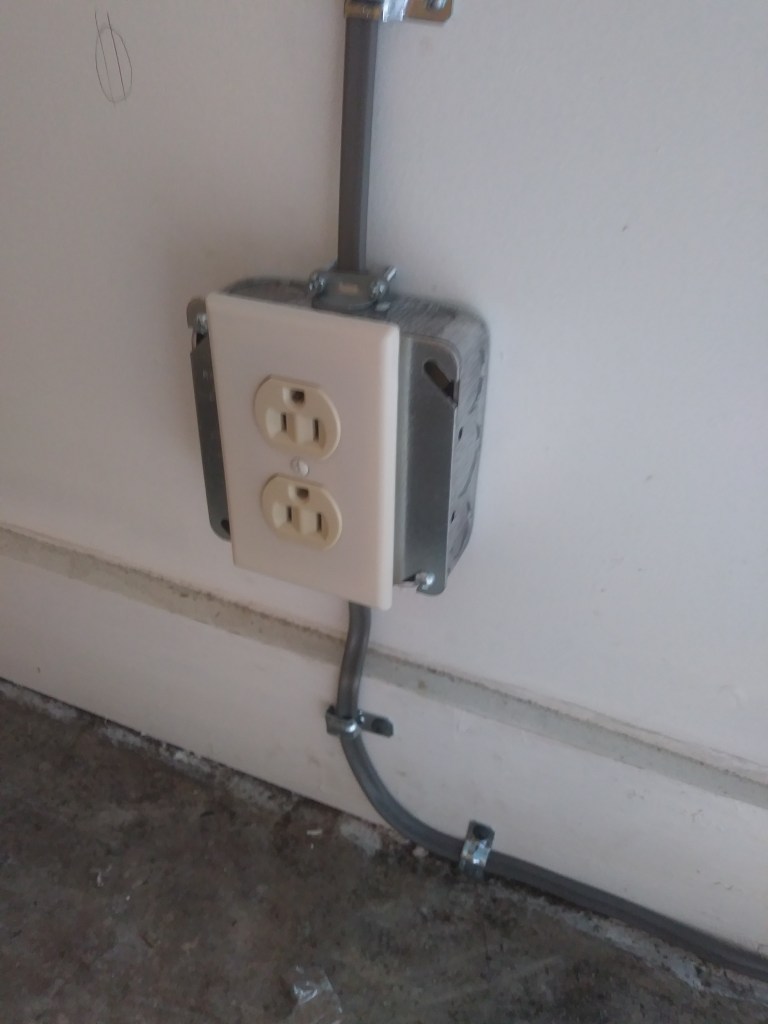
After:

Two of these installed. You’ll note how the ground is on top, which is the correct way to install them, although the popular style in the U.S. is to invert the receptacle.

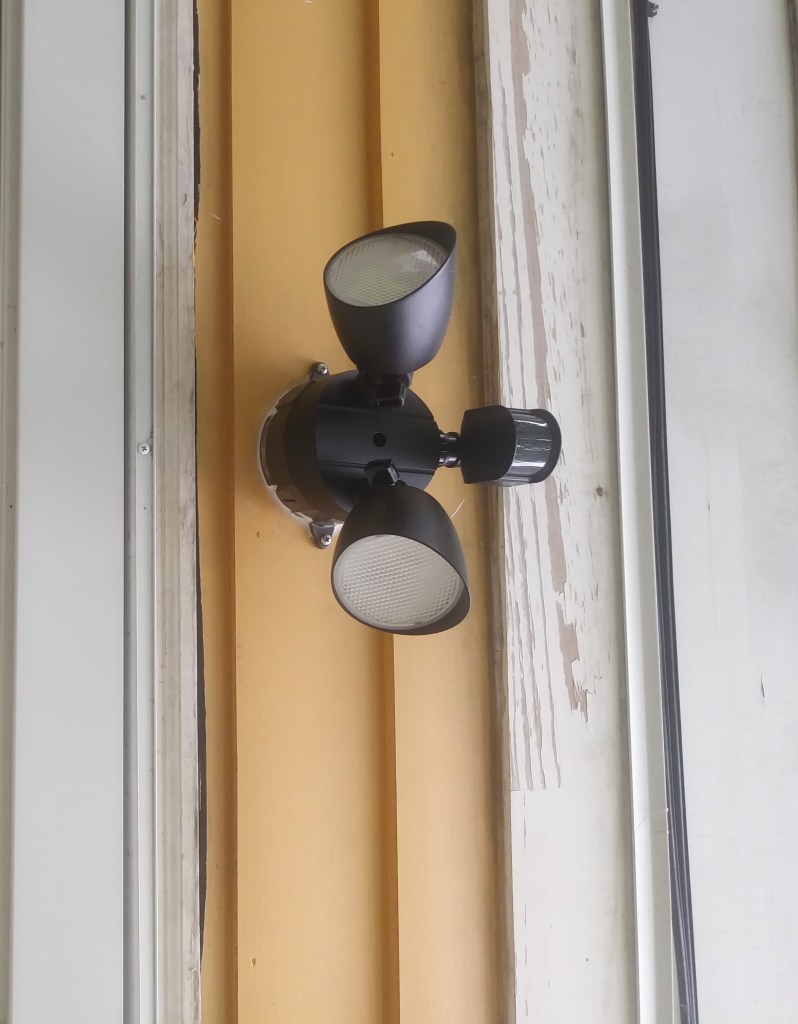
New motion activated light:

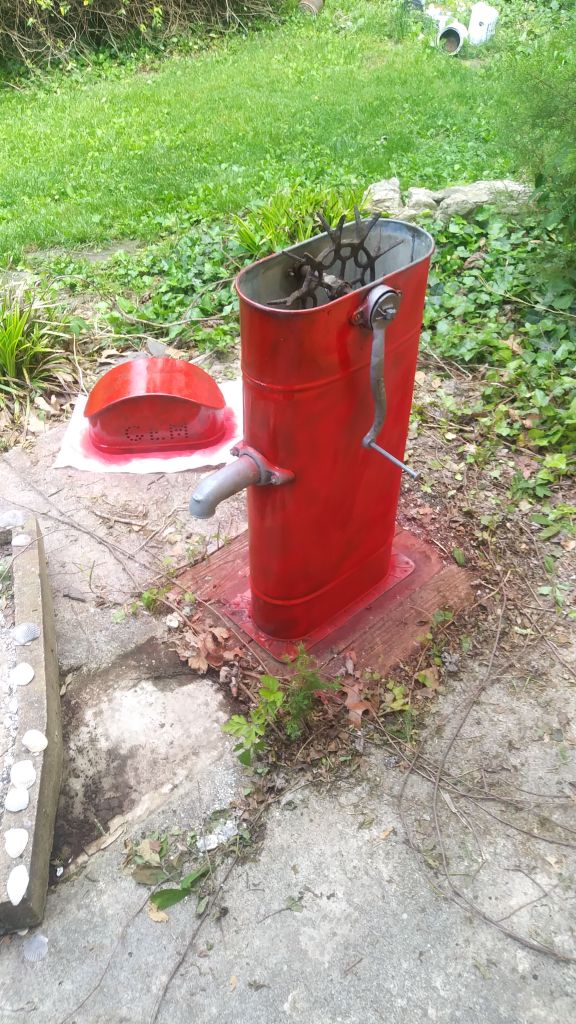
Scraped and Painted Pump

Before:

After:

This will probably get a second coat, along with the chains and buckets to make it functional.

Federal Government · investing · Personal Finance

That Kind of Hertz

In an eleventh hour weekend move, the car rental company Hertz filed for bankruptcy, sending its shares for a lovely ride:

“Give you a lift?”

I’m curious what stands to follow, especially as many states continue their draconian frighten in place orders despite the economic bleeding. The travel industry and airlines might raise particular concern, but even some restaurants could hit the chopping block due to their brick and mortar ways. And that’s all excluding oil, which has a lot of livelihoods attached to it throughout various parts of the U.S.

If nothing else, this crisis should inform politicians of how fragile the financial web remains in our country. Sending over thirty million to the welfare rolls in order to save them from the invisible enemy strikes the mind as nanny state idiocracy, which we surely don’t have in America. After all, this is the greatest country on earth.

Right?

#VanLife · Personal Finance · Self-Improvement

Restoring Goldberg Manor: Part I

As many of you know, I have ventured out into the great boomer unknown and purchased a house. My goal with this series of posts is to give a sense of the improvements and changes which the building has (and will) suffer through in the name of preservation and stability. In certain cases I didn’t take a picture before changes occurred, so we’ll have to employ our active imaginations.

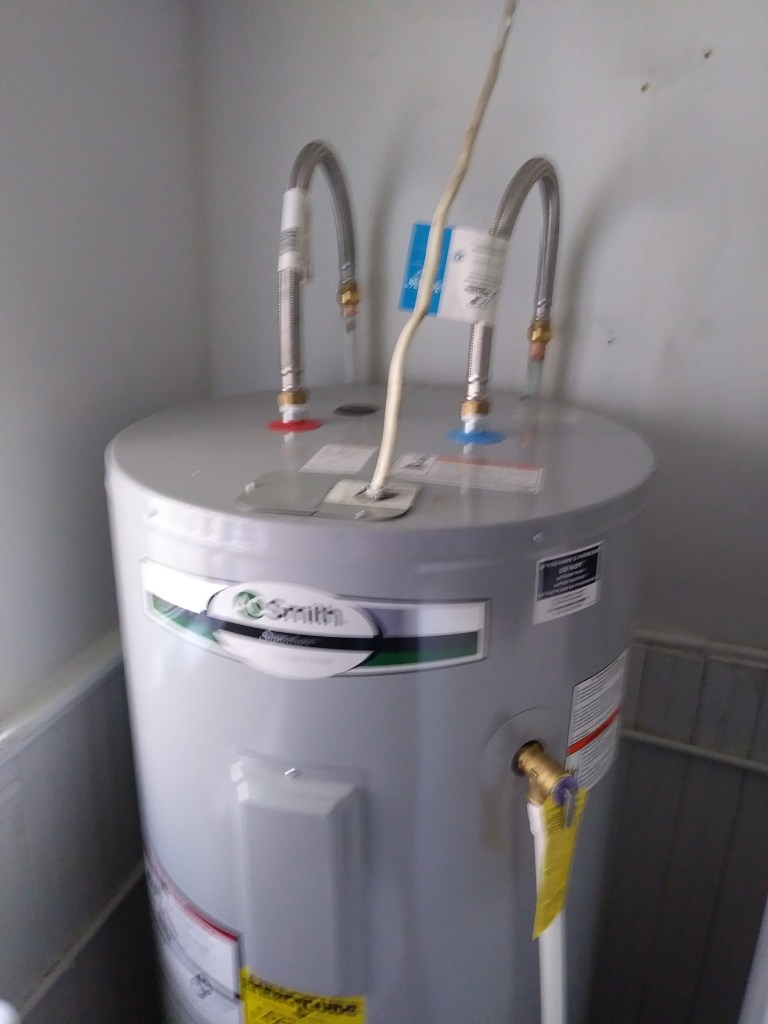
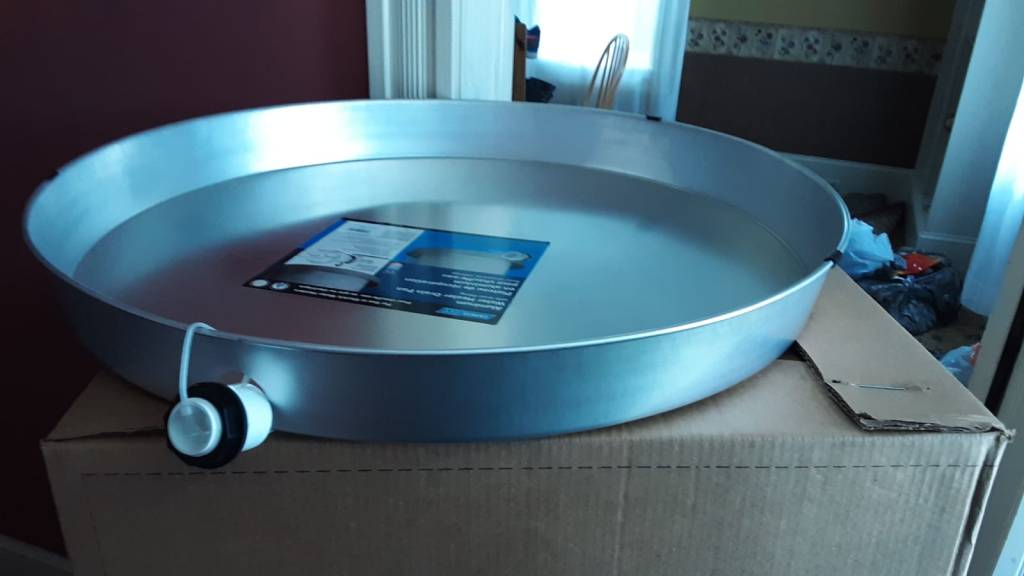
New Water Heater Plus Drain Pan:

Floors Sanded and Coated:

Before:

Moi foot

After:

(Note the paint change too, done to enhance lighting)

investing · Personal Finance · Self-Improvement

Are Beggars Beating The System?

When I was younger, I recall watching the Sherlock Holmes series starring Jeremy Brett. While not always equal to the Basil Rathbone version, it delivered thrills aplenty, bringing to life countless tales by Sir Arthur Conan Doyle. A particularly poignant example is “The Man With The Twisted Lip,” which focuses on a wealthy but debt-troubled man who mysteriously vanishes, only to be discovered playacting as a beggar to help service his liabilities. It’s possible that the tale was written with assumptions of upper-class snobbery towards the poor, but that should not jettison the social value, particularly in today’s early retirement and money-scrounging culture.

I thought back to the show over the last two weeks, as I handed out cash to several panhandlers between my work shifts. Of course they might well be down on their luck, but what if they aren’t? What if homeless beggars are more like our friend in the show, a clever masquerader seeking to avoid the wages of tax?

From what data is available, a panhandler might draw $100-$300 dollars a day in an American city,  This doesn’t sound especially great, but remember that the funds are tax-free. To put it into perspective, when I worked retail some years ago, an eight-hour shift gave me $80.00 in gross income. After taxes, paying for boomer retirement, and Berniecare, I was sitting closer to sixty-five bucks. From any standpoint, that’s a yuuuge difference.

We should further understand that homeless people have access to soup kitchens and shelters, two helping hands that absorb other daily expenses. Should the person be masquerading of course, they might live with a family member or pay minimalist rent off the books to avoid added scrutiny. Meanwhile, Clarence Goodman has to cough it up for housing, food, gas, and Trojans, all to ensure semi-regular affection from his wow, man.

Now you might say, “Sure, but they don’t get all those great benefits!” As it turns out, that depends. Disabled folks can claim SSDI up to a certain level, and the general homeless population is eligible for Medicaid, with some regional variances. To be sure though, they miss out on subsidizing the retirement of the elderly, which does rather sting.

There are some downsides, to be clear. Any pretender to the homeless throne would have to deal with rough weather, lack of consistent sanitation, low money haul days, and the usual social stigma. In addition, whenever they chose to “clock out” of the streets, their behavior would have to carefully avoid attracting suspicion from the empowered and governmental.

Still, it’s a thought.

Federal Government · investing · Personal Finance

Can Free Market Healthcare Work?

One of the silliest debates in the last ten years has been that surrounding healthcare. Progressives screech about the need for broader Medicare coverage, and conservatives extol the virtues of “free market reforms” to bring down medical costs. In both cases, they miss the mark by fixating on the delivery of insurance rather than an elimination of health issues in the first place.

For the purposes of this post, let us consider conservative arguments. They will typically join libertarians in advocating a rollback on insurance regulation and hospital restrictions, along with less government intervention in the economy. Many will note that in 2013, government spending was already 48 percent of the total for healthcare, and yet costs do not seem to be coming down. They might even point to the historical example of Nelson Rockefeller, who tried to expand government coverage of people under Medicaid, but had to abandon the program after it became too expensive.

These are all valid concerns, yet we run up against several problems. To begin with, as long as hospitals find it difficult to deny care to those who cannot pay, fellow travelers will end up footing the bill. Private insurance already acts like a placeholder of sorts for the government in these situations, but they simply amp up premiums on others to support the weaker links. Further complicating matters on the insurance side is the McCarran-Ferguson Act of 1945, which granted sweetheart exemptions to the insurance industry from federal antitrust laws, making it harder to prevent price gouging.

At least for the purer conservatives and libertarians, antitrust restrictions are a troubling question, appearing to some as a needless restriction on liberty. Others term them “anticompetitive,” and claim such legislation was only implemented to benefit industry actors who were losing market share. The front is thus not unified, although the House did vote overwhelmingly to approve a repeal of McGarran-Ferguson in 2010, only to see it die in the Senate.

The bigger issue being left out of the free market argument is the effect which lifestyle has on personal health. It’s easy enough to note that people must take responsibility for their own diet and exercise regimen, but this view fails to acknowledge contributing health factors sourced in other areas. If we fail to properly regulate food production, for example, we might well have hog waste getting into the water supply, if not the ham itself. The consequences have been algal blooms and massive fish casualties, yet who knows how many humans might already be affected.

Permitting high levels of added sugar in cereals or snacks is another problem. Sure, people are responsible for their own actions, but children will be capricious over what they want. In some cases, those kids might have been raised consuming junk, and not know any different. The mere availability of unhealthy foods might also result in them being consumed because of convenience, particularly if there is no existing market for healthier alternative in close proximity.

Sensible regulation is an obvious solution, with the EU providing baselines, but conservatives and libertarians will often come out against any further government control – while also demanding free market healthcare. Clearly this poses a problem. If people are eating garbage products because “it’s good for the economy,” then they will likely drive up costs after developing conditions like heart disease, diabetes, and cancer. Unless care is entirely individualized, with people “only paying for what they need,” and those unable to pay getting denied service, even private sector insurance will end up subsidizing them through risk pools and higher premiums. In other words, everyone gets charged more.

Thus we are left with a conundrum. Either we must overhaul food production and environmental protections to prevent disease in the first place, or make everyone pay out of pocket for their needs alone. As long as insurance plays a leading role however, the latter idea remains a wistful thought.


investing · Personal Finance

How The Stock Market Works

As some of you surely know, Elon Musk’s lovely contributions to humanity have taken yet another fanciful turn. After a few hard lemonades, he spat this out on the tweet deck:

I’m sure there’s more to the story than meets the eye, though it presents a fascinating look at how markets react in the current age. We have already seen how the Religious Investor approach chucks all principles and guidelines out the window in favor sheer fanboyism, but it’s getting worse. Literally nothing matters except the increasingly-fatter balloon of millennial viral popularity.

 Tesla fans will quickly castigate any skeptics on stock price by appealing to the “technology of the future,” but a mere microemail from their leader is now enough to cut about $15 billion from the market cap. Is the company now fairly valued, still too big, or dirt cheap? No guess exists worth taking.

In fairness to Teslaites, the rest of the stock market is not acting much different, so they can hardly be brought up on charges of cucking against humanity. We just have to sit and wait, or maybe buy bitcoin and hope it goes to $150,000. I mean, come on.

All that’s left to say is this: quality weed matters, Elon.  

investing · Personal Finance · Self-Improvement

The Problem With Self-Help

Ever since the 2008 financial crisis, there has been an explosion of new self-help guides on the internet dot com. Old legends like Tony Robbins keep cranking it out, while young orangutans jostle for their piece of the pie. Almost every online following seems to devolve into the genre with varying degrees of intensity and commitment.

That’s all good, but an unfortunate theme appears to pervade most of the books: complete disconnect from reality. I happened upon this realization after reading through The Compound Effect  by Darren Hardy. It’s a short and compelling read that rehashes the timeless principles you typically hear, such as:

  • That $4.00 coffee at Starbucks every day adds up to $51,833.79 after 20 years.
  • If you make only $40,000, bring a bag lunch and cancel your magazine subscriptions, plus change your cable provider. This will save you a lot of money which could be invested for a higher return.   
  • If Stacey puts $250 in her Roth IRA each month starting at age 23, she’ll have $1 million by age 67, in this case ASSUMING she gets an 8 percent return, compounded MONTHLY.
  • If Chad does the same but delays his start by a a few years, he’ll have only $300,000 at the same age.
  • Surround yourself with positive people and energy.
  • You’re 100 percent responsible for your actions/decisions/choices.

The last hyphen point is especially interesting. Hardy does attempt to push the gospel of self-improvement, laying into the folks who blame other elements for their misfortune, such as family or the government. He hoists the individualist banner valiantly, yet towards the end of the book there is a brief disclaimer which can be summarized as follows: You’re 100 percent responsible for whatever you do, but those choices are INFLUENCED by powerful external forces.

At precisely this moment, the “Stop complaining and focus on yourself” mantra is dealt a fateful blow. Obviously one can apply all those principles, but there is nothing preventing a Black Swan from tossing it all back to square one again. These gurus seem to forget that prior to the 2008 collapse, companies like Lehman Brothers and Bear Stearns were well-respected, with both residing in various investment and retirement portfolios. Concurrently, there was no shortage of self-help spin doctors encouraging people to “Save every penny so you can invest” for the future. No doubt others adhered to those philosophies, but nothing stopped the macro-level malevolence of corporate and governmental interests.  We can look at the oil collapse of 2014 (and even 2020), along with the Coronavirus financial spanking to see a steady dynamic afoot. The train rattles on.

I suppose the takeaway should be that for all the benefits of helping yourself and “being an individual,” there are always factors at play well beyond your control, and those unwelcome guests can easily crash the self-reliance party.

Anyone bring the Natty Light?

Federal Government · Personal Finance

Our Man In D.C.

I tend to deliver a lot of realist commentary, which can come off at times as “black pill” or “depressing” to different people. While I disagree with the characterization, from time to time we encounter brilliant rays of hope to uplift the broader gloom of the time. In this case, the glimmer comes in the form of Mark “The Rejector” Calabria.

Mr. Calabria is the director of the Federal Housing Finance Agency, and the strongest line of defense against further corporate rescues by the federal government. Just to place it in perspective, Fannie Mae and Freddie Mac already have their hands in over half of the $11 trillion mortgage market,  and advocates are clamoring for a lot more.

No dice for them so far. Calabria has continued to block their hopes, and even suggested he would have not permitted the 2008 rescues which handed cash to select industry failures. Imagine that.

It remains to be seen how long he can hold out before someone higher up (read: McPelosi) overrides the move and dishes out money, but for now the horizon is splendid.

Here’s hoping for more Calabrianism.   

#VanLife · Personal Finance

The Van Life Squeeze

How do you crap and wash, when the washer and crapper are locked?

One of the central problems to any “lifestyle” is the existence of the single point of failure, a factor which can bring down the ship despite an otherwise solid condition. In the case of #VanLife, this rests around the brick and mortar facilities used to discharge waste and feel like Mr. Clean.

Ever since the coronavirus pandemic erupted, governments have been instating draconian shutdown orders which force businesses like gyms and recreation centers to close. The result has slammed mobile life residents, who rely on those spots to release and refresh. With work gyms and showers being similarly shuttered, the list of hygiene allies grows thin.    

There is always the possibility of purchasing a solar shower or portable toilet, though the former can be less ideal in colder climates, and the latter takes that sweet aroma out of the #VanLife romance, depending on one’s typical diet.

Other pandemic problems include the impact of social distancing on parks and parking lots, where many car lifers will camp for the night. Closures in the first case and closer scrutiny from department stores or police on the other create a significant problem. Plus we have the “watchful neighbors” turning into Stasi informants for the government in some areas.

Yet another factor would be the restrictions on access to libraries, where VLers may use Wi-Fi and check out movies, or simply enjoy the AC.

This is not to say the lockdown will be indefinite, although some crazies want it extended for years. Instead, people who romanticize the mode of living need to understand what difficulties and sacrifices are entailed.

If you want a clearer idea before taking the leap, check out my book: Six Months In A Van