Personal Finance

A Warning On “No PMI” Mortgages

Home ownership is a tricky question that increasingly less young people are bothering to answer, but for those who take the leap, there are some pitfalls to lookout for.

Case in point: “No PMI” mortgages. To the fresh and eager, PMI stands for Private Mortgage Insurance, a wonderful charge applied to loans where the debtor puts a down payment of less than 20 percent on the overall price. It might not be a whole lot, but evading monthly expenses is usually a good thing.

Almost too good. As it turns out, lenders that will let you avoid that added cost are just trying to reel the line in. Sure, there is no PMI officially on the statement, but they will simply RAISE your rate offer to compensate.

For instance, say the prevailing interest rate for a conventional fixed loan of $200,000 is 3.75 percent. Normally, you would get a PMI of 0.5-1 percent, so between 83-166 dollars monthly.

Because the banker is a wonderful human bean, he will waive the PMI fee, whilst jacking up the mortgage rate to 4.75 percent.

Looking out for you

So yes, you do “save” by not paying PMI. They just take it out (with interest) and give a big smile.

It’s all about the numbers.

Uncategorized

What If Success Destroys You?

Being born in the West – or migrating here and getting steeped in its culture—means meeting certain expectations: you must dive into the rat race, striving for the highest level of education and salary possible. Choosing to be a non-conformist is unacceptable.

But what happens when a person makes that choice? It’s one of the greatest conflicts of liberalism, a matter usually explained away as the fault of mental illness, extremism, or laziness, each reason carefully avoiding any legitimacy. After all, liberalism only works if our lives collectively obsess with growth.

Of course the world is more complicated than the Liberal State likes to pretend, and the cracks are beginning to show. Take this article from our lovely sisters at Hufflepuff. It tells the story of a “model minority” who slaved for years to get into a good school, only to drop out after a few weeks.

Is she a white supremacist? A person struggling with autism? Perhaps an angry misogynist? Some other thing that liberalism can avoid responsibility for?

Apparently not. The young lady was burnt out and destroyed by the stresses and pressure of Liberal Culture. Consider the following quote:

“I knew deep down that I was only following the path designated to me through expectations. I was following the promise of fortune and success as defined by my parents.”

True enough. The fixation she had ingrained on status and material success led to insomnia, stress, and her search for a simpler, albeit not as spotlight-hungry existence. Imagine that.

I would argue liberal superiority is slowly dying. Over the next several decades, we shall bear witness to how successful its maniacal devotion to economic growth, aimless diversity, and atomization has become.

Uncategorized

Treadmill Rage

I’m kind of curious where “outrage” originates. Not the general term, but our modern manifestation of it on the internet dot com, where only a sliver of a tweet can send thousands into heroic action, ready to destroy evil.

Case in point: the Peloton ad.

When I saw this commercial for the first time, the main thing I noticed was the woman’s personality: award and anxious, but with a determined spirit. She wants to keep up with her workouts throughout the new year.

Completely unacceptable

I barely noticed the husband’s character, which seemed to exist only as a stepping stone for the narrative: she’s a busy mom, but she wants to stay fit and healthy. Hence the “selfie discipline” videos she takes throughout that journey. A criminal matter? Hardly.

But this is today, and we have surface level activists in tow. The ad is apparently promoting sexism, because the husband wants her to lose weight. As if that’s a bad thing.

Sure, she’s already slim and attractive, but gymcel life is not only about losing flab – it also concerns keeping yourself healthy – and cardio certainly won’t hurt. Most of us could use more exercise, regardless of gender.

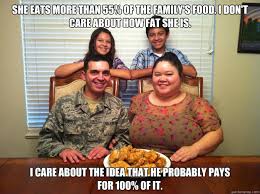
While I am hesitant to assume, my natural conclusion is that the shrieking rage-casters probably look something like this:

Or this:

Is that a horrendous strawman? The answer is clearly No. More like a Hostess-fed Cake Beef.

Folks, if you find yourself talking to a man or woman angry about this treadmill ad, look at their waistline. The proof is in the Chaps belt.

Personal Finance

How Much To Save Monthly For $1 million

I have never been a big fan of “How To Save a Million” articles. They all too often drip of the smug empathy you would expect from modern financial experts; plenty of hope, but very little reality.

Why they stop at $1 million baffles me, as it’s not nearly enough money to retire, especially when we factor in healthcare costs. In truth, you need closer to three times that amount to get anywhere close to a decent golden year lifestyle, and that’s assuming a whole lot of other things fall in line. One million bucks should thus be a short-term goal of about ten years, as opposed to some career-spanning objective.

Let’s use that first million in a decade with the Bankrate calculator, which generates a pre-tax number. If you were to start with $20,000 and put in $500 per month, you would have 125k after ten years, assuming an average return of 7 percent and inflation of 2.9 percent.

That’s not good enough.

Suppose we double it. Now you’re putting in $1,000 during every 30-day block, and still only reaching 20 percent of your goal after a decade.

So how much do you REALLY need? About $5,700 in total contributions, PER MONTH. That’s the reality, folks. And here we’re assuming no drastic market collapse, along with careful investing to avoid tax penalties.

To be fair, we are not factoring in an employer 401k with matching, but those are not always available, and you still are limited by the $20k or so cap.

The takeaway is this: you either need to save much more money, get a pension, or find somewhere extraordinarily cheap to retire.

One million dollars won’t cut it.  

Personal Finance

Buying a House is No Fun

Something I have come to realize is that most narratives of Americana are pushed to benefit a particular market segment. You have proposals for Zales, football for beer, and country living for trucks. They all seem so wonderful, the makings of a dream for the working man. Just spend a little money.

I have another to add on the list: buying a home. Despite loads of banking propaganda, the reality is a whole lot less satisfying than it seems. High costs, unit problems, and finding one you actually like.

As I go through the process myself, I am calling into question most claims made by the scruffy promoters. Houses don’t seem to be assets, because they’re either too expensive to pay by yourself, or too small to have appreciation potential.   

Want to rent it out? Better check with the HOA or neighborhood watch. And don’t get me started on municipal laws. It all becomes a heartache.

Stumble upon a dream model? Too bad, it has an antiquated heating system, outdated septic, or some fat foundation crack. But the list price is still high, and you have enough competition to make the bidding tight.

 In the event regular houses are off the table, you face townhomes and condos with astronomical fees, sometimes over $600 monthly, just to live there. Rest assured it is a “starter home,” however.

Maybe I’m just too crotchety for 2019, but holy closing costs. What happened to the American Dream?

Uncategorized

Republicans Are In Denial

Maybe it’s not a fair observation. After all, Reince Priebus made his cringe outreach strategy post-2012 to snag the minority vote, on what basis I’m not terribly sure. You have to remember that the evil anti-minority bogey for the GOP that year was Mitt Romney, who outrageously suggested migrants might self-deport.

Ooh! Sounds racist. But that’s beside the point. Looking at the results of this Tuesday’s election, you really have to wonder how Republicans are planning to proceed.

In Virginia, a swath of hard left candidates won office, pushing Democrats over the top to give them unified government come next year. They plan to “move quickly,” no doubt cutting back on gun rights and further hindering federal immigration enforcement. Especially noticeable was the northern region, once represented by moderate Republicans and now increasingly dominated by leftist migrants from the Indian subcontinent. Also, empowered Muslims.

Rumor has it the Democrats celebrated their newest diversity victory by singing, “For Southern rights hurrah!”

Kentucky was only slightly better. Bevin, who I never thought highly of, lost by a sliver because of muh pensions. That’s still quite significant in a deep red state. You don’t see a whole lot of blue regions narrowly electing right wingers, so the happening is huge.

Even in Mississippi, the GOP only held the executive seat by about seven points – a weak showing considering the standards. Coupled with the near-disastrous outcome in Georgia last year, there may well be a reckoning for former Confederacy in the near future.

So, what should Republicans do? Continue sharing their Baby Boomer memes about Reagan and diversity? Emphasize they believe in freedom and tax cuts? Rename themselves the Social Democrats of America?

Or maybe, get real about the immigration issue.

Uncategorized

Choose Your Slavery Wisely

Having an online discussion about politics and economics is really like a relationship; you don’t agree on much, and at the end of the day, someone is a fascist or just plain evil. The middle ground, wherever it might be hiding, should just retire to neglect and celibacy.

In point, people seem intractable when it comes to their views on the State or the “Galt,” which I’ll use here in place of the private sector. Modern political parlance maintains that you are either pro-government intervention because the corporate honchos are bad (leftist), or in favor of limiting the State to make way for economic prosperity (conservative). Snap. Crackle. MAGA.

The main problem arriving with these attitudes is the danger of tethering your destiny to close on one or the other. As far as I am concerned, the State is a necessary evil. We join a social pact of sorts and give up certain types of freedom in exchange for baseline security, enforcement of contracts, and infrastructure organization. Definitely not perfect, but it is there.

Corporations on the other hand provide opportunities for employment, technological development, and the chance to invest for retirement. The negatives lie in corrupt practices, cost-cutting at the expense of workers, and political influence.

Leftists and conservatives seem intent on destroying one in the name of the other. We hear endless refrains about evil corporations or the excesses of government, and the two extremes become moral competitors for the political religion of the masses. Listen to them for a few minutes and you might swear they are ready to “bend the knee” in service for the cause.

But should anyone want to? Being a fellow comrade in some Stalinist regime doesn’t sound appealing, but neither is the tepid wage-slave existence we are marching towards with mainline global capitalism. Both can abuse you, and while the latter probably won’t put a gun to your head, they can slowly poison you with preservatives and excessive sugar. Guess it’s a happy death though.

The reason Centrism exists is because the balance is necessary. There are some places where the government can safeguard our rights as individuals and workers, and others where Galt is unquestionably suited for the job. They complement and check one another, so long as we watch them closely.

Otherwise, it might be a taskmaster in a worker’s cap or a pristine yuppie in his best suit, but you still are a slave.

Uncategorized

What Libertarians Don’t Understand

I once put out a video concerning the idea that low-skilled workers are only worth minimum wage. This is a notion crudely adapted from the wisdom of Milton Friedman by your pub counter advocates of liberty on the internet. In short, the market doesn’t value these folks enough to pay them more, hence the limited wage levels.

My point in the video was that wages actually come down to the jurisdiction in question. Companies aren’t paying sweatshop laborers $7.25 per hour because they can, but must give at least that to Americans by law. If the minimum wage were repealed, it is questionable that they would continue paying the same rate.

I also noted that these jobs are in some cases highly-demanding and emotionally-draining (retail customer service), or integral to the profit model of the company (Dominoes delivery driver). They might not require exorbitant skill sets, but they provide tremendous VALUE.

As I expected, a horde of libertarians descended on the comments section. They began with the furious “That’s a strawman!” volley, because no one likes seeing their talking points dissected.  

Others claimed I was wrong because the wage is determined by the replaceability of the worker/skillset. In their mind, the manual laborer is not worth more money because a new worker can easily be found, whilst a lawyer or doctor require advanced training.

They are absolutely right, and that’s the problem with Libertarianism. We can all sit here with smug attitudes and remark, “Oh just learn to code!” as though the economy should be merely built on some Darwinian mad dash. People have lives beyond competitive ambitions, and this flippant approach is destructive to their well-being.

Suppose for a second the libertarian position is implemented in a non-strawman way. Since our freedom-lovers collectively support the unrestricted moment of goods and services, there is nothing to stop migrants from underbidding jobs and creating a “race to the bottom” where wages decline and standards of living shrink. They can just live twenty people to an apartment and squeeze out the native citizens. Easy as pie.

Arrogance and superiority complexes don’t deceive. If we are to maintain the nation-state with any degree of dignity, we cannot allow free access to increasingly-cheaper labor. That way lies the path of poverty.  

Uncategorized

Why Entry-Level Jobs Require Experience

We’ve all seen it before: a job listing on Indeed or LinkedIn calling out energetically to recent graduates and folks ready for an entry-level position. If you’re like most people, you rushed to scroll down and apply, amazed that a company would offer you the opportunity to use your undergraduate degree and get trained while making money.

Until you saw the requirements:

– Bachelor’s degree from an accredited university; Master’s degree preferred.
– 5-7 years progressively responsible experience in a leadership role.
– Considered subject matter expert on industry-specific standards.
– Provable experience saving children from starvation and eradicating cancer.
– A motivated and enthusiastic personality.

At this point you probably felt confused. How on earth could an entry-level position require a chunk of a lifetime in experience? Was this conception or something?

In reality, what you stumbled upon is a perfect illustration of the modern economic paradox: You need experience to get a job, but you need a job to get experience. Cool beans, huh?

The simply reasoning behind this dynamic is as follows: corporations don’t want to pay you what you’re worth. They’d prefer that you work like a dog for low wages and poor benefits, because “At least we’re giving you a JOB.”

Let’s turn back time for a second. During the 1990s, hiring, managers began aggressively pushing the “professionalized managerial workforce” mantra, a program designed to bottleneck the careers of people with plenty of experience but no degree. This effectively kneecapped people in early-to-mid stages of their work life because they could not advance without a certification.

The broader impact market made young people panic, sending them to college in droves to ensure they would be employed. It also LOWERED the value of people with existing degrees, allowing their starting salaries to be suppressed.
So here we are in 2019, with the Bachelor’s degree viewed as the new high school diploma, and companies still atavistic in their attempts to cap pay. The question is, what can you do?

Answer: be willing to walk away. If you have qualifications that hold high market value, refuse to settle. You’re liable to hear stuff like “This is the opportunity of a lifetime to learn and grow at 45k!”

That’s cute. But it is not acceptable. Keep a firm hand. The corporate apologists will try to shame you into believing you’re worth nothing, and training is too costly. Or the bottom line is crying.

In that case, you can’t afford to work for them.

Culturalism

You Don’t Know What Ad Hominem Means

If you have ever backed someone against a wall in an argument on the Internet dot com, chances are good that they started frantically screaming about a litany of fallacies which they neither seem to understand nor care about better comprehending. It was just a momentary gust of emotion, a burst of covering fire to the right and left before they pompously declared, “I don’t have time for small-minded peasants like you!” and proceeded to bravely run way. This behavior is widespread, and even well-educated advocates of civil discourse will employ it, often to merely save face. The sad part is, they probably believe themselves to be correct, and that each of those fallacies truly applies to the context.

Trying to change the irrationality of the internet is a futile endeavor, but at least on an individual basis you can avoid committing the same lazy sins of the mob by considering the weight of your words. The following is a list of the popular candidates in word fuselage, and their correct utilization.

The “Ad Hominem” Fallacy

What it is: Attacking something about the person in place of addressing their argument.

What is it not: Contradicting your opinion with a reasoned manner, and providing facts to support.

Example:

John: Cutting taxes stimulates growth, as shown by this chart.

You: You’re just a greedy bastard who hates poor people!

The “Strawman Argument” Fallacy

What it is: Setting up an opposing argument in a deliberately weak manner so as to effortlessly defeat its propositions.    

What is it not: Defeating your argument logically and making you feel embarrassed.

Example:

Cindy: Rehabilitation can help prevent recidivism on the part of paroled convicts.  

You: LOL so you basically want murderers and rapists on our streets.

The “You’re Projecting” Fallacy

What it is: Holding a position based on a genuine personal insecurity of some sort.     
What is it not: Disagreeing with your viewpoint.

Example:

Nate: I believe child molestation is a heinous crime which should be punished.

You: Nope, you’re just are a repressed pedophile projecting your secrets on the world.

Bonus Example:

Michael: The promiscuity of this woman contributed to the destruction of her marriage.

You: Sounds like you’re just insecure because she’s not having sex with YOU.

The “No True Scotsman” Fallacy

What it is: Using a standard of purity to protect something from dissenting arguments.     

What is it not: Pointing out a legitimate difference in philosophy between individuals or groups.  

Example:

Paul: There are devoted Muslims who believe violence against non-believers is righteous and justified as part of their submission to Allah.  

You: Those people are not “true” Muslims The only way to be a true Muslim is to be like Allah, who is perfect. Since humans are imperfect, no one can be like Allah, and therefore no one can be a true Muslim.